Significance of Shob-e-Borat
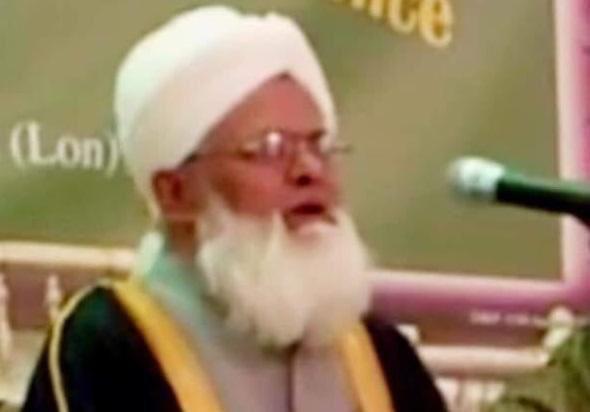
Allama Mufti Mujahid Uddin Choudhury Dubagi : Those who believe that there is no existence, haqiqat (reality and truth), fadhilah (virtue) and special significance of the 15th night of Sha’ban, can read Hadith no. 739 in the 2nd volume of Jami` at-Tirmidhi, one of the six canonical collections of Hadith (Kutub as-Sittah) of the Sunnah of the Prophet (pbuh). They should study it, and go through the Hadith books and receive education by sitting before the qualified teachers with the intention of acquiring complete knowledge before issuing fatwa without having full knowledge of this subject.
Imam Tirmidhi (Rahimahullah) determined a chapter on the significance of the 15th night of Sha’ban, giving the chapter the same title. Hazrat Ayesha (Radhi Allahu’anha) narrated a Hadith in this regard and then narrated it from her Hazrat Urwah (Radhi Allahu’anhu). Hazrat Ayesha (Radhi Allahu’anha) said, “I could not find the Messenger of Allah one night. So I left and found him at Jannatul Al-Baqi. He said: ‘Did you fear that you had been wronged by Allah and His Messenger?’ I said: ‘O Messenger of Allah! I thought that you had gone to one of your wives.’ So he said: ‘Indeed Allah, Mighty and Sublime is He, descends to the lowest Heavens during the night of the middle of Sha’ban, to grant forgiveness to more than the number of hairs on the sheep of Banu Kalb.” – (Jami` at-Tirmidhi, Hadith no. 739).
From this Hadith two things are proven: (1) the full chapter was set by Imam Tirmidhi (Rahimahullah) under the heading of the 15th night of Sha’ban and (2) the narration of Sunnah by Hazrat Ayesha Siddiqa (Radhi Allahu’anha) that the Prophet (pbuh) had a particular habit of rising on the 15th night of Sha’ban to pray. Not only did he pray, but he also went to the graveyard – Jannatul Baqi. Some people hold mistaken views that there is no evidence of his going to the graveyard and offering of Fateha. In reply to them, it can be said that it is proven by the chapter in Jami` at-Tirmidhi and the Sunnah of the Prophet (pbuh). Furthermore, it is proven by the narrations of both Hazrat Abu Bakr (Radhi Allahu’anhu) and Hazrat Ayesha (Radhi Allahu’anha), which were determined by Imam Tirmidhi (Rahimahullah) by having a separate chapter. Attention should be given to those Hadith experts who established the chapter for narrating Shob-e -Borat or the 15th night of Sha’ban. What a surprise! It is not true that there are millions of Hadiths among which one or two Hadiths have been hidden secretly and could not be found by any one. Rather, the chapter for the 15th night of Sha’ban was established in Sihah Sittah, the most reliable six books of Hadith. Despite this, it is often said that there is no narration about it or even that it does not exist at all. What a surprise!
Now, I would like to discuss Hadith no. 1388 on page no. 108 in Sunan Ibn Majah in the 2nd volume, which is again one of the prominent books of Sihah Sittah. It has a chapter entitled: ‘Narrations about the 15th Night of Sha’ban’.
It was narrated by Hazrat Ali Ibn Abi Talib (Radhi Allahu’anhu) “The Messenger of Allah (pbuh) said: ‘When it is the night of the 15th night of Sha’ban, spend this night in prayer and observe a fast on that day. As Allah descends at sunset on that night to the lowest heaven and says: ‘Is there no one who will ask Me for forgiveness, that I may forgive him? Is there no one who will ask Me for provision, that I may provide for him? Is there no one who is afflicted by trouble, that I may relieve him?’ And so on, until dawn comes.’ ” – (Ibn Majah, Hadith no. 1388).
The difference between the 15th night of Sha’ban and other night is – in the final one third of each night Allah pours out His kindness and He descends to the lowest heaven and calls His servants to seek forgiveness. On the other hand, the distinctiveness of the 15th night of Sha’ban is that immediately after sunset, Allah descends to the lowest heaven with special attention and offers His forgiveness and salvation to His servants till the time of Fajr prayer. When any Hadith specialist fixes a chapter and narrates more than one Hadith instead of mentioning only one Hadith, then it can be undoubtedly said that with this, he did not only specify a chapter in his book, but it was the firm belief of Imam Ibn Majah (Rahimahullah). Similarly, Imam Nasa’i and Imam Tirmidhi (Rahimahumullah) had the same Aqidah and belief. They themselves used to perform prayers on this night with due care and importance. They did not place any Hadith in the chapter without following the proper rule, and (instead) specified the chapter according to the strict rules.
It was the practice of the Muhaddiseen-e-Keram that when they established any heading for any chapter, they did it out of their own firm faith and belief. For the subject on which the heading is determined, all the relevant Hadiths are collected under that heading, which support the heading and proves this Aqidah.
In this perspective, Imam Ibn Majah, Imam Tirmidhi, Imam Nasa’i (Rahimahumullah) and Muhaddiseen-e-Keram have established headings in their own books of Hadiths. It is proven from this that all of the Muhaddiseen-e-Keram believed that it was a significant and dignified night which is proven by Sunnah. They used to observe this night with due importance and engage themselves in Ibadah and inspire others to do so.
In a similar chapter, Imam Ibn Majah (Rahimahullah) narrated a Hadith on the authority of Hazrat Abu Musa Ash’ari (Radhi Allahu’anhu) that – “Allah looks down on the 15th night of of Sha’ban and forgives all His creation, apart from the idolater and the Mushaahin (those who in their minds bear grudge, malice and hostility).” Along with the aforementioned text on the authority of Hazrat Mu’az Ibn Jabal (Radhi Allahu’anhu), Imam Tabarani and Imam Ibn Hibban (Rahimahumullah) also mentioned it. Moreover, Imam Ahmad Ibn Hambal (Rahimahullah) narrated it in his own ‘Musnad’. He also narrated from Hazrat Amr Ibnul Aas (Radhi Allahu’anhu). Similarly, Hazrat Ali Murtaza (Radhi Allahu’anhu) also narrated it. In addition, Imam Baihaqi (Rahimahullah) narrated from Ayesha Siddiqah (Radhi Allahu’anha). Here it is said that the angel Jibriel came and said, “Oh Apostle of Allah, it is the 15th night of Sha’ban and a gift for you, on this night, Allah Almighty releases people from hell fire”.
“Shab-e-Borat” is in fact a Persian word which simply means “a night of freedom”. In Hadith, it is mentioned as “Utaqaawu Minan-Naar” or the night of freedom from the fire of hell. This title is given by our Prophet (pbuh). The Hadiths regarding the 15th night of Sha’ban were narrated by eight companions of the Prophet (pbuh). After narrating this hadith, carried out Hadith-related research. There are many witnesses that said the Hadith is sahih (authentic). The said Hadith was also mentioned by Ibn Abi Shaibah in the book titled ‘Shu’abul Iman’. It is also quoted by Imam Bazzar (Rahimahullah) on the authority of Hazrat Abu Hurairah (Radhi Allahu’anhu). Then Hazrat Awf Ibn Malik (Radhi Allahu’anhu) narrated it, and it was also narrated by eight Companions along with various Sanads (chain of narration). There are about 50 separate Hadith books which contains the Hadiths regarding the Fadhilah of Nisf-e-Sha’ban i.e. Shobe Borat. Muhaddiseen-e-Keram said, it is not correct to say that this Hadith is Da’if (weak), or that Hadith has Du’f (weakness). If a Hadith is narrated with only one Sanad, then it would have scope for discussion. But this Hadith was narrated by eight Companions of the Prophet (pbuh). Each of the Companions of the Prophet (pbuh) and the Imams of the Hadiths mentioned this in separate Sanads. Besides, there are so many Sanads from Tabi’, Tab al-Tabi’. if one Sanad is weak, it becomes more powerful by support from other Sanads. If the second is weak, it becomes powerful by virtue of the third one. When a huge team of experts of Hadith described the matter independently, along with Sanads, then there is no prospect for the existence of weakness in these Hadiths.
In addition, there is an accepted rule of Usul al-Hadith, practicing with weak Hadiths is permitted relating to faḍāʾil al-aʿmāl (virtues of deeds). Now, I wish to present more evidence in this respect. A team of Companions of the Prophet narrated it and Imam Muhammad (Rahimahullah) specified a chapter entitled “Shobe Borat” in his book “Kitabus Sunnah”. Similarly Imam Ahmad Ibn Hambol (Rahimahullah) established the chapter on Shobe Borat and Imam Bazzar (Rahimahullah) also did the same. Moreover, there are many Hadiths narrated in this respect in Musannaf of Abd al-Razzaq (Rahimahullah) and the Hadith-specialist Imams specified the chapter with the title of the subject. Despite all this proof, if anybody still claims that there is no basis, Haqiqat and existence of Shobe Borat, it is nothing but ignorance and the rejection of knowledge of Hadith books and the valuable treasures of such knowledge.
Imam Muhammad Ibn Al-Hasan Al-Shaybani (Rahimahullah) stated in this regard that all the Hadiths before him are sahih (authentic), because, a large group of Sahaba-e- Keram, Tabi’un, Tabi’ al-Tabi’in had mentioned these Hadiths. One Hadith empowers the other. Now, we may also examine the fact that Imam Muhammad Ibn Al-Hasan Al-Shaybani (Rahimahullah) narrated (with sanads) from Hazrat Mu’az Ibn Jabal (Radhi Allahu’anhu), Hazrat Sa’laba (Radhi Allahu’anhu), Hazrat Abu Musa Ash’ari (Radhi Allahu’anhu), Hazrat Ayesha Siddiqah (Radhi Allahu’anha) and Hazrat Abu Bakr (Radhi Allahu’anhu).
Likewise, Imam Ibn Hibban (Rahimahullah) mentioned it in his Kitabus Sahih (Hadith no. 5665) from these Companions of the Prophet (pbuh) and at first he cited Hazrat Abu Hurairah (Radhi Allahu’anhu). In fact, the main objective of mentioning these references from Hadith books, and their sources of Sanads, credibility, consistency and above all the specified Hadith is that it is not correct to say on seeing a Sanad and narration that there is Du’f, i.e. weakness in it. Many people have no idea what Du’f (weakness) actually is. A false Hadith cannot be classified as Da’if. It is necessary to remember that weakness in a chain of narration is not related to its text or the subject matter of a Hadith; rather for some reason there is a weakness in the chain of narration. If weakness appeared in a Sanad for any reason, it is strengthened by another powerful Sanad. Some people out of ignorance about Usul al-Hadith and the science of Hadith spread confusion among the public by their discussion and statements. It is advisable for these people that they refrain from making false statements and misleading the public about Shob-e-Borat, with the possible effect that people will think that Shob-e-Borat is nothing but a custom or tradition rather than a night of ibaadah.
This Hadith was narrated by Imam Al-Haythami (Rahimahullah) in Majmau’ al-Zawa’id wa Manba’ al-Fawa’id. Imam Ahmad Ibn Hambol (Rahimahullah) after narrating this Hadith, said that all the narrators are reliable. Hazrat Ayesha (Radhi Allahu’anha) also narrated it through a separate Sanad. This Hadith was also narrated by Hazrat Mu’az Ibn Jabal (Radhi Allahu’anhu) and Hazrat Abu Musa Asha’ri (Radhi Allahu’anhu). Subsequently, Ibn Hibban (Rahimahullah) mentioned it. Imam Ibn Asim (Rahimahullah) narrated it on the authority of Hazrat Abu Bakr (Radhi Allahu’anhu). Imam Al-Bayhaqi (Rahimahullah) also recounted it in ‘Shu’abul Iman’. Then Imam Bazzar (Rahimahullah) narrated it from Hazrat Abu Bakr (Radhi Allahu’anhu). Imam Ibn Khuzaimah (Rahimahullah) mentioned it too. In addition, Companion of the Prophet (pbuh) Hazrat Salaba (Radhi Allahu’anhu) described it, that fact is mentioned in Kitabus Sunnah by Imam Asim (Rahimahullah).
Allama Ibn Taymiyyah (Rahimahullah), who is credible and accepted by all scholars of Saudi Arabia, wrote about Shob-e-Borat in his book Fatawa Majmu’a on page No. 132, Volume No. 30, that: “There are many Hadiths which described the excellence of the 15th night of Sha’ban and there are many sayings of Companions of the Prophet (pbuh) regarding it. Likewise, many opinions of the Salaf (pious predecessors), Tabi’in, Tab’i al-Tabi’in are available. It is a proven fact that on this night they used to perform prayers and did ‘Ibadah with due importance.”
More to the point, Caliph Umar Ibn Abdul Aziz (Rahimahullah) instructed his governors that apart from Lailatul Qadar, four nights should be observed with proper dignity. Among them the first night of Rajab and the 15th night of Sha’ban were included. Hazrat Imam Shafi’i (Rahimahullah) said, there are five nights along with Lailatul Qadar, on which du’a is never rejected by Allah, the Almighty. These are: 1. The Night of Jummah, 2. Nights of both Eids, 3. First night of Rajab month, 4. 15th night of Sha’ban.
Sheikh Abdul Haq Muhaddith Dehlavi (Rahimahullah) described in his book entitled ‘Maa Sabata Bis Sunnah’ (meaning, what is proven by Sunnah) devoted a separate chapter to the significance of the month of Sha’ban and the night of Shob-e-Borat. He also described ‘Ijma’ regarding this subject matter of all Hadith expert Imams.
Hazrat Gausul Azam Shaikh Abdul Qadir Jeelani (Rahimahullah), who was a follower of Hamboli Madhab, devoted a separate chapter to the matter in his book ‘Ghuniyatut Talibeen’, and on page No. 339 he collected many Hadiths about Shob-e-Borat.
Imam Jalaluddin Suyuti (Rahimahullah) in his book titled ‘Addurrul Mansur’ mentioned 25 Hadiths regarding Shob-e-Borat. Imam Zurqani (Rahimahullah) states in his commentary of Imam Qastulani (Rahimahullah)’s ‘Al-Mawahib Al-ladunniyya’, that among the significances of Sha’ban, the fact is also included that, “It is in this month in which Allah Almighty revealed verses of Durud and Salam upon His Prophet (pbuh).” He said that, since this verse has been revealed in the month of Sha’ban, the relationship of Sha’ban with Durud and Salam is more and much more with the glory of Allah, salvation and Tawbah. So, the ‘Ibadah on this night enables us to achieve closeness with the Prophet (pbuh), especially that of Allah Almighty.
May Allah make us understand the facts and dormant theme of this subject and give us the ability to be benefited by the said Barakah and Niyamah. Aameen.
(Writer: Prominent Islamic scholar and author of many books)
সম্পর্কিত খবর


- নিউইয়র্কে স্ট্রিট ভেন্ডরদের জন্য নতুন আইন কার্যকর, বাতিল জেল শাস্তি
- নিইউয়র্কে টাইমস স্কয়ারের মঙ্গল শোভাযাত্রা ১১ এপ্রিল, যোগ দিচ্ছেন ম্যানহাটান বরো প্রেসিডেন্ট ব্র্যাড হোয়েলম্যান
- নিউইয়র্কে ‘অল কাউন্টি হেলথকেয়ার গ্রুপ’র বার্ষিক ইন্টারফেইথ ইফতার পার্টি অনুষ্ঠিত
- নিউইয়র্কে জালালাবাদ অ্যাসোসিয়েশনের কোরআন তেলাওয়াত প্রতিযোগিতার ও ইফতার মাহফিল
- যুক্তরাষ্ট্র যুবদল নেতা জাকির এইচ চৌধুরীর সংবাদ সম্মেলন: আদালত কর্তৃক মীমাংসিত বিষয় নিয়ে অপপ্রচার চালিয়ে যাচ্ছে রাজনৈতিক প্রতিপক্ষ
- নিউইয়র্কে জালালাবাদ এসোসিয়েশন অব আমেরিকা’র ইফতার ও দোয়া মাহফিল
- নিউইয়র্কে গ্রী ম্যাকানিকেল ইয়াঙ্কার্স এর ইফতার ও দোয়া মাহফিল অনুষ্ঠিত
- নিউইয়র্কে ঢাকা জেলা অ্যাসোসিয়েশনের ইফতার ও দোয়া মাহফিল